Mold in Air Ducts: How to Identify, Test, and Actually Remediate It
How to identify real duct mold, when to test, and what a legitimate remediation looks like — versus the surface-spray upsell.
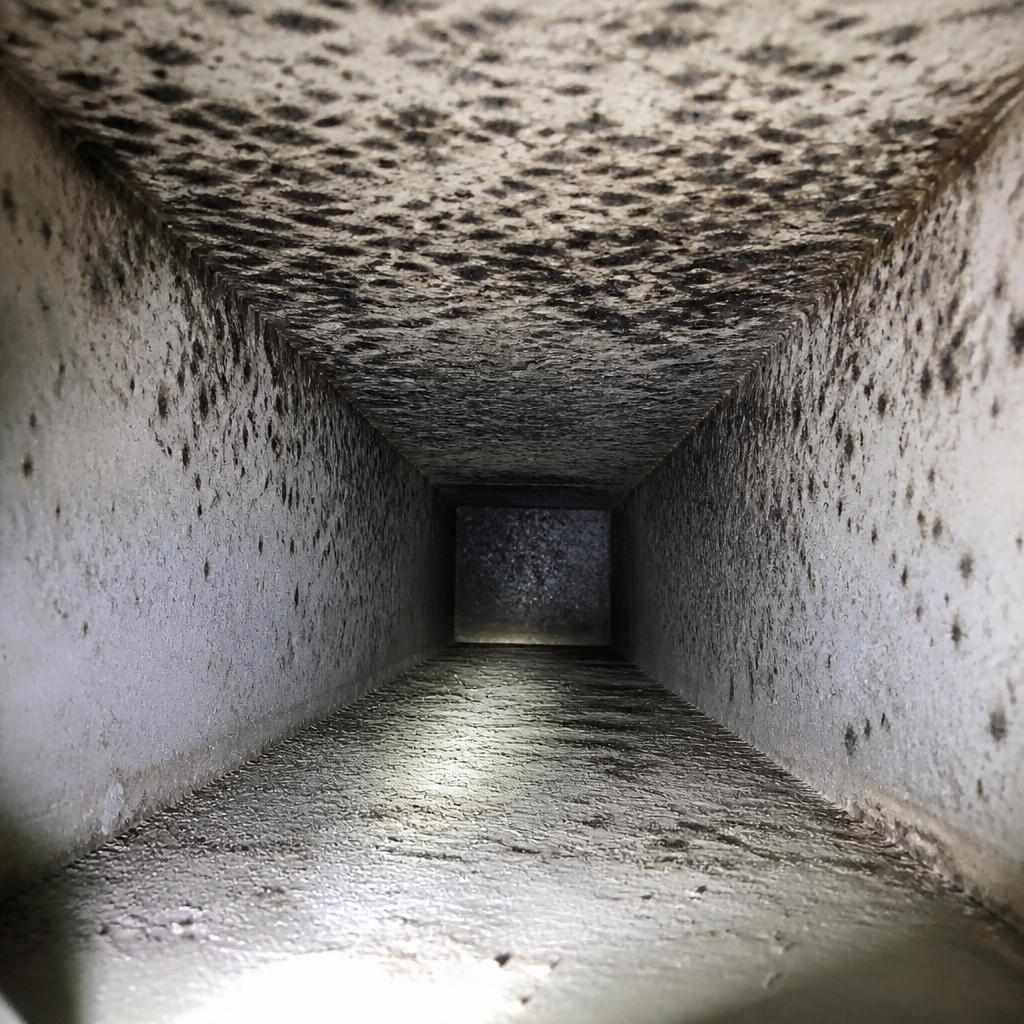
Mold in ductwork is a real problem — and a heavily oversold one. About 30% of the "mold" quotes we see homeowners hand us on second opinions are just dust, drywall paper, or oxidized flex-liner adhesive. Here is how to tell what you actually have and what a legitimate fix looks like.
What real duct mold looks like
- Fuzzy or velvety texture on the interior duct wall (not powdery)
- Dark green, brown, or black with a distinct edge, not a general gray coating
- Musty smell that intensifies the moment the blower kicks on
- Located near the evaporator coil, condensate drain, or in attic flex duct — the wet spots
- Visible on the register face as dark spotting around the perimeter
What often gets mis-called mold
- Grey dust accumulation on interior sheet-metal (just dust)
- Yellow-brown streaks in flex duct (oxidized inner-liner adhesive)
- Drywall paper facing on interior duct board (looks fuzzy but isn't microbial)
- Rust on register frames (iron oxide, not mold)
When to actually test
Air testing is not always needed. Book a surface tape lift or swab test ($50–$150) when:
- Occupants have documented mold allergies or asthma
- The condition covers more than 10 square feet
- Insurance or a real estate transaction requires documentation
- The homeowner wants written proof before/after remediation
Skip air testing if a visual inspection already documents the growth — a lab report on a fuzzy black spot doesn't change the fix.
What a real remediation includes
- Containment — plastic sheeting at register openings, negative-air machine
- Physical removal — HEPA vacuum, rotary agitation whip on all affected runs
- Source correction — fix the moisture problem (leaking coil pan, uninsulated duct in hot attic, high indoor humidity)
- EPA-registered antimicrobial applied as a fog, not a surface spray
- Duct replacement for any fiberglass-lined or flex duct with entrenched growth (mold roots into porous liner and cannot be cleaned)
- Post-remediation clearance — visual + air sample if warranted
- Written report with photos, product SDS, and warranty
Red flags to walk away from
- "Ozone treatment fixes duct mold" — ozone doesn't remove mold, only masks smell
- "Fogging alone with no vacuum" — antimicrobial on top of biomass just leaves dead mold in place
- "We can clean fiberglass duct board with mold" — usually cannot; often needs replacement
- Any quote over $2,000 with no camera documentation
What we do differently
Every mold call gets a camera scope before a quote is written. If the growth is real, we show you the source moisture, quote physical removal + fog + moisture fix, and back the remediation with a 12-month regrowth warranty. If it isn't mold, we tell you — and clean the dust for a fraction of the mold quote.
Call our dispatch for same-day inspection and no-pressure written pricing.